PLM Beyond Engineering Boundaries: Connecting Academic Learning with Industrial Practices
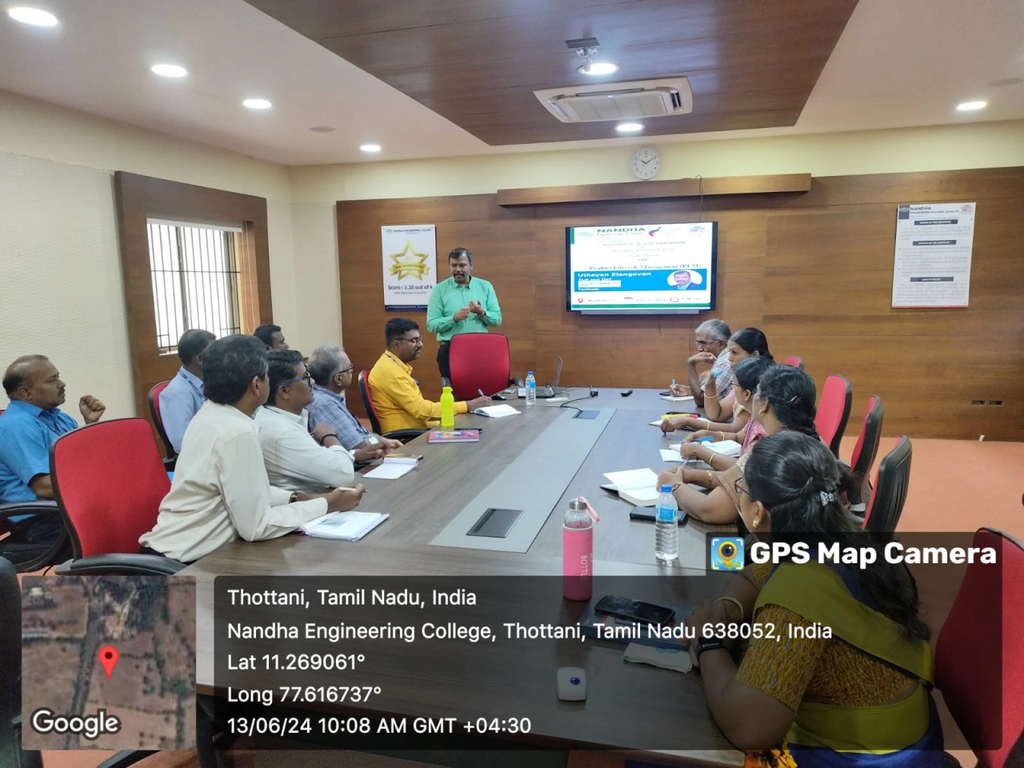
A PLM workshop for Heads of Departments at Nanda Engineering College | June 13, 2024
Product Lifecycle Management (PLM) is often introduced as a technology for managing engineering designs, CAD data and product documentation. However, its real significance becomes clearer when we look at how different engineering disciplines work together to develop, manufacture and support a product.
On June 13, 2024, I had the opportunity to conduct a workshop titled “Enhancing Engineering Efficiency and Innovation Across Disciplines” for the Heads of Departments (HODs) at Nanda Engineering College. The discussion focused on a simple question: How can PLM knowledge help engineering students understand the way modern industries actually develop and manufacture products?
Connecting Engineering Disciplines Through PLM
The session covered the fundamentals of PLM, its importance in engineering, and the different stages of a product lifecycle – from concept and design to manufacturing, service and end of life. An important part of the discussion was understanding PLM’s relevance beyond Mechanical Engineering. Mechanical, Electrical, Electronics, Mechatronics, IT and Computer Science departments all have a role in modern product development. Each contributes different information and expertise, but these contributions must come together to create a complete product. We also discussed how PLM improves engineering collaboration, product quality, change management and information consistency, along with the career opportunities emerging in PLM and digital engineering.
From PLM to ERP, MES and IIoT: An Industrial Perspective
To connect the concepts with industrial applications, I presented a case study illustrating the relationship between PLM, ERP, MES and IIoT.
The discussion followed the flow of product information:
- PLM: Defining and managing the product through engineering, BOMs and changes.
- ERP: Connecting product information with business planning, procurement and resources.
- MES: Translating manufacturing requirements into shop-floor execution.
- IIoT: Connecting machines and equipment to capture operational data and manufacturing insights.
The important takeaway was that these technologies should not operate as isolated systems. Engineering decisions have implications for procurement, production and shop-floor operations. Similarly, manufacturing feedback can contribute to future product improvements. This is the industrial context in which future engineers need to understand digital technologies.
What Should Engineering Institutions Take Forward?
Introducing PLM into engineering education does not necessarily mean adding another software subject. It means giving students opportunities to understand how engineering information moves across departments and how different technologies support industrial operations.
Some practical starting points include:
- Introducing PLM concepts into relevant engineering subjects.
- Providing hands-on exposure to PLM tools and product structures.
- Connecting CAD exercises with BOM and engineering change processes.
- Encouraging multidisciplinary projects.
- Building industry partnerships for practical learning, internships and guest lectures.
We also discussed emerging developments such as Artificial Intelligence, Digital Twins and the growing relevance of Industry 4.0 and Industry 5.0
Continuing the Industry–Academia Conversation
Sharing practical industry knowledge with academic institutions has been a continuing part of my professional journey.
Previous engagements include:
- GNA University’s CII HR Conclave – Industry 4.0 Trends in Engineering and Manufacturing (2020)
- Introducing PLM to ECSGA at Concordia University, Canada (2020)
- PLM and Industry 4.0 Sessions at BITS Pilani (2021)
Each engagement has provided an opportunity to discuss the connection between engineering fundamentals, enterprise technologies and industrial applications with students, faculty members and academic leaders.
My approach is to bring practical manufacturing and PLM experience into these discussions, using industry examples and business scenarios rather than limiting the conversation to technology definitions or software demonstrations.
Beyond the Workshop
Engineering education and industrial practices need to remain connected. As products become more complex and manufacturing becomes increasingly digital, students need a broader understanding of how engineering disciplines work together.
PLM is one practical way to start that conversation.
I look forward to contributing to more industry–academia initiatives through panel discussions, technical conferences, invited talks, guest lectures and focused workshops on PLM, IIoT, Industry 4.0 and Industry 5.0.
Invite an Industry Perspective to Your Institution
Looking to bring practical industry perspectives into your next academic event?
Uthayan Elangovan and Neel SMARTEC Consulting contribute to panel discussions, technical conferences, guest lectures, faculty development programmes and focused workshops covering:
- Product Lifecycle Management (PLM)
- Industry 4.0 and Industry 5.0
- IIoT and Smart Manufacturing
- Digital Engineering and Digital Transformation
- PLM–ERP–MES Integration
For academic collaborations and speaking engagements: https://neelsmartec.com/speaking-engagements/
Planning a PLM or Digital Transformation Initiative?
Discuss your roadmap priorities, engineering data challenges, or PLM readiness gaps with Neel SMARTEC.
Schedule a Strategy Discussion