Let me brief about AM and it’s process as, followed by What AM suggest to PLM.
Additive Manufacturing (AM) is a warm topic in the manufacturing, item, and also design development. AM is an appropriate name to explain the modern technologies that construct 3D objects by adding layer-upon-layer of material. Occasionally described as rapid prototyping or 3Dprinting is a method of manufacture where layers of a material are developed to create a solid things. While there are various 3D printing innovations this write-up will concentrate on the general process from style to the last part. Whether the last part is a quick model or a final practical part, the general process does not transform.
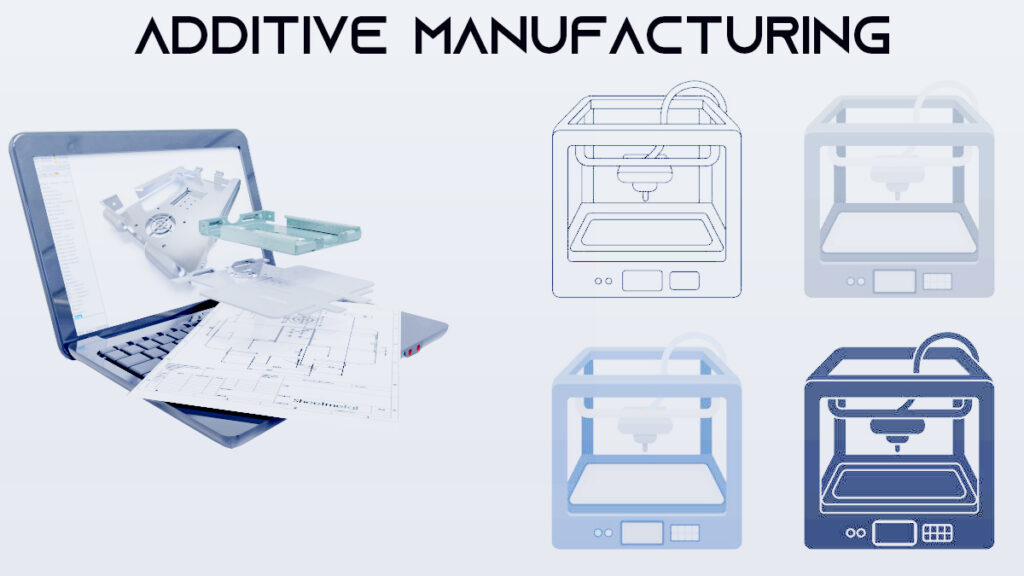
Common to AM technologies is using a computer system, 3D modeling CAD system, device tools as well as layering material. When a CAD illustration is created, the AM devices reads in data from the CAD documents and lays downs or adds succeeding layers of liquid, powder, sheet material or other, in a layer-upon-layer fashion to fabricate a 3D things.
AM application is infinite. Early use AM in the kind of Quick Prototyping concentrated on Pre-production visualization models. A lot more lately, AM is being used to make end-use products in aircraft, oral repairs, medical implants, vehicles, and also even style products.
Process of Additive Manufacturing
- Producing a CAD design is the very first step in the additive manufacturing process. Reverse design can additionally be utilized to generate a digital design via 3D scanning.
- A vital stage in the additive production process that varies from typical manufacturing methodology is the requirement to convert a CAD design right into an STL (stereolithography) data. STL makes use of triangles(polygons) to define the surfaces of an object.
- 3D printing press typically consist of numerous small and elaborate parts so appropriate upkeep and also calibration is important to generating exact prints.
- Elimination of the print is as simple as dividing the published part from the construct platform.
- A lot of 3D printing products have the ability to be fined sand and also various other post-processing methods consisting of rolling, high-pressure air cleaning, polishing, and tinting are applied to prepare a print for end use.
Different technology of Additive Manufacturing are classified as
- Stereolithography (SLA) – Really luxury technology making use of laser innovation to heal layer-upon-layer of photopolymer resin.
- Fused Deposition Modelling (FDM) – Refine oriented including use of polycarbonate products infused via indexing nozzles onto a platform. The nozzles trace the cross-section pattern for each particular layer with the polycarbonate material hardening before the application of the next layer.
- Multi-Jet Modeling (MJM) – Similar to an inkjet printer because a head, with the ability of shuttling to and fro (3 dimensions-x, y,z)) integrates hundreds of small jets to apply a layer of thermopolymer product, layer-by-layer.
- 3DP -This entails developing a design in a container loaded with powder of either starch or plaster based product. An inkjet printer head shuttles applies a percentage of binder to develop a layer.
- Selective Laser Sintering (SLS) – Utilizes a high powered laser to fuse little fragments of plastic, metal, ceramic or glass. Through out the construct cycle, the system on which the build is repositioned, lowering by a solitary layer thickness.
Final Thoughts:
So, what does AM suggest to PLM – AM will considerably transform how product advancement is done, and also therefore will have a very substantial effect on PLM procedures. Just my thoughts!
Planning a PLM or Digital Transformation Initiative?
Discuss your roadmap priorities, engineering data challenges, or PLM readiness gaps with Neel SMARTEC.
Schedule a Strategy Discussion